
Paella
Recipe
GRANADA COOKING EXPERIENCE
Granada-style paella
In Spain, there are over a hundred different ways to make paella. This is our recipe for Paella Granadina for us, the best recipe in Spain, handed down through our families. It’s the paella we eat when we get together with friends or family, or for any celebration that comes up. It’s a very special recipe for us, and one we’re very proud of.
Ingredients (serves 4)
step by step
It’s best to have all the ingredients ready so that when we start cooking, we can add everything at just the right moment
There’ll come a point when you’ll wonder. But when do we add the prawns, lemons and the salt?’ Don’t worry, this will be done in the final steps. We don’t want to ruin our paella.
· Slice the red and green bell peppers very thinly
· Mince the garlic cloves very finely
· Puree the three tomatoes
· Measure out the sweet paprika and white wine
· Bring 60 ml of water to a boil, then remove from heat. Then add the saffron and set aside until it cools, creating a saffron infusion that you’ll use later
· Peel the shrimp and set aside the shells and heads (very important).
· Weigh the rice and prepare a 3:1 ratio of chicken broth
Time to start heating the pan. From this point on, the key is not to keep any ingredient waiting any longer than necessary. The timings are precise and must be followed to ensure a delicious pella. However, every kitchen and every hob is different, so cooking times may vary slightly
Turn on the heat and set it to a temperature of 6 out of 10
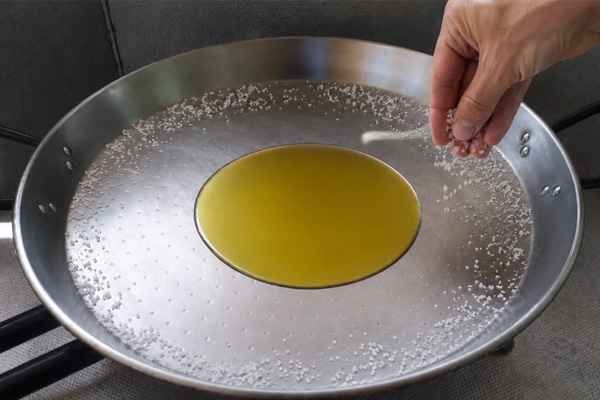
Add about 40 grams of extra vigin olive oil (we’ll add the rest little by little as needed while cooking). It’s important to use all the oil throughout the process, since we need these fats to achieve the right texture for the rice.
Add salt around the edges of the paella pan, as this will help all the ingredients absorb it gradually. Everything we cook next will be cooked in the center.
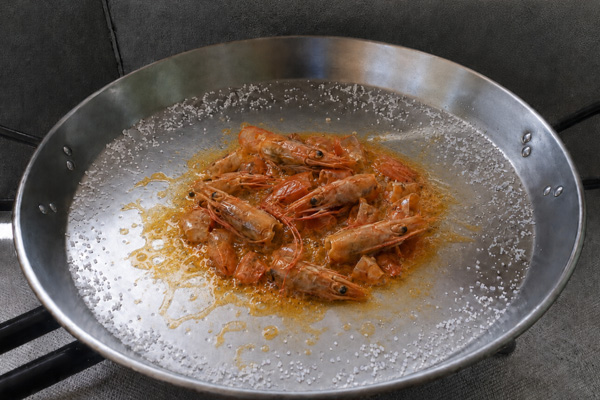
PRAWNS: ABOUT 3 MINUTES
Add the king prawns heads and the remaining shrimp shells. Let them sauté for 3 minutes, until they change color. It’s important to press the heads with the spatula to extract their juices and ensure they remain mixed with the oil.
Now remove the shrimp heads and remaining shells from the paella (you’re done with them, so you can throw them away). Be sure to save the shrimp bodies for the final step in making the paella.
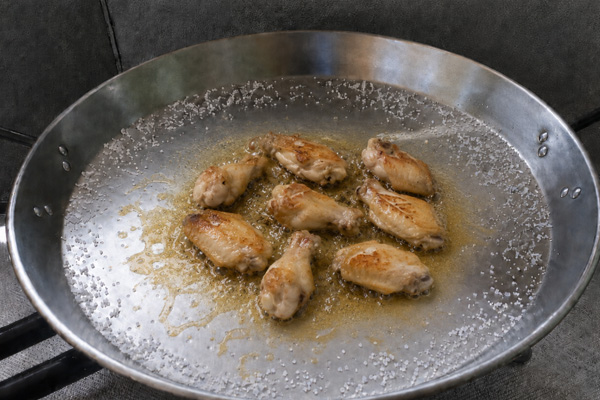
CHICKEN: ABOUT 5-6 MINUTES
Cook and brown the chicken
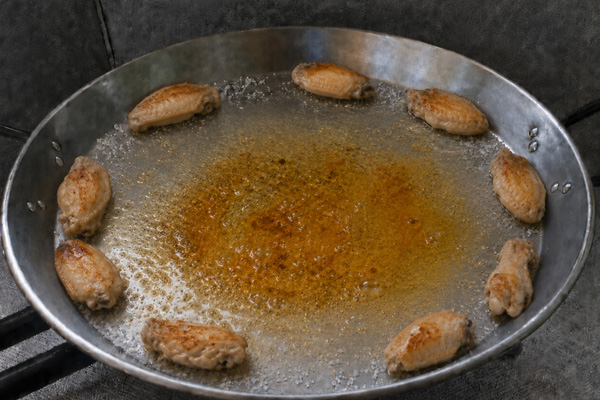
This step is very important. We need the chicken skin to brown when it comes into contact with the paella pan, but without burning. We need that browned color to remain in the paella pan, along with the oil from the shrimp. This step is vital for adding flavor to the broth later on.
Once cooked, move the chicken to the outer edge of the paella pan, where it will come into contact with the salt. The chicken will remain there until the recipe is finished.
Add the 2 teaspoons of paprika to the oil. Then quickly add the tomato (don’t wait more than 10 seconds). Be careful, the paprika can burn and give the dish a bitter taste. It needs to cook in the liquid from the tomato.
Once you’ve added the tomatoes, let them reduce. Be patient again!!!! The tomatoes need to lose most of their water and become paste-like.
Be careful. We’re going to add a few more ingredients, just when there are 3 or 4 minutes left before the tomato reduction is finished.
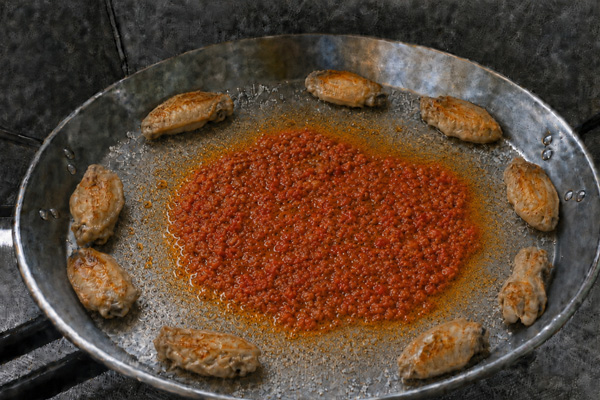
Add the finely chopped green and red bell peppers. Now is the time to add a chili pepper if you want the rice to be slightly spicy. Add the chili pepper, let it cook for just 3 or 4 minutes, and then remove it.
Add the white wine and let the alcohol evaporate. This process may take 2 or 3 minutes.
Add the chicken broth and let it heat up. Now is the time to taste it for salt. You’ll probably need to add a little salt until the broth tastes just right.
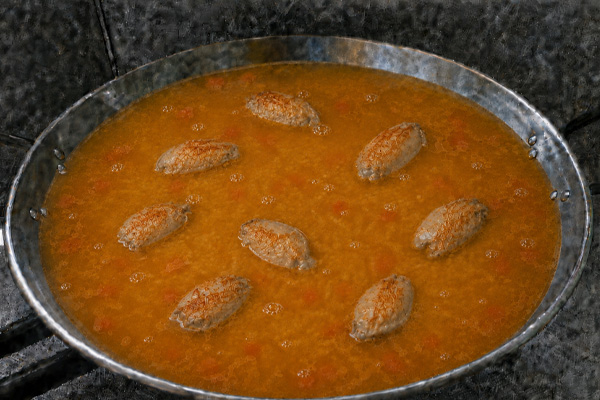
Add the infusion saffron
Add the rice and stir all the ingredients well so that the rice is evenly distributed.
The rice in the paella is cooked for around 18–20 minutes in total, WITHOUT STIRRING. The key technique is: 8 minutes over a high heat (at a rolling boil), followed by 10–12 minutes over a medium-low heat. Finish with 1–2 minutes over a high heat to create the socarrat*, then leave to rest for 5 minutes
It could be that you don’t have enough water at a 1:3 ratio, and the rice will come out hard. You’ll have to keep tasting it; if, at the end of cooking—when there’s hardly any water left—the rice is still hard, add a little very hot water so as not to interrupt the cooking process. It’s not ideal, but depending on your stove, the heat level, the type of rice, and the type of paella pan, this could happen. If that’s the case, make a note of the mistake, and for your next paella, use a ratio of 1:3.5 or 1:4 of rice to broth.
Two or three minutes before the paella is done, add the peeled king prawns and a sprig of rosemary.
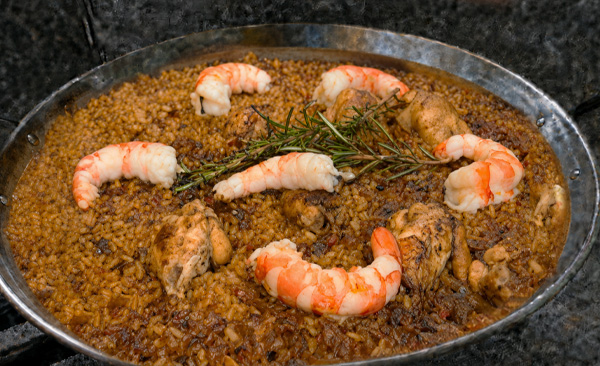
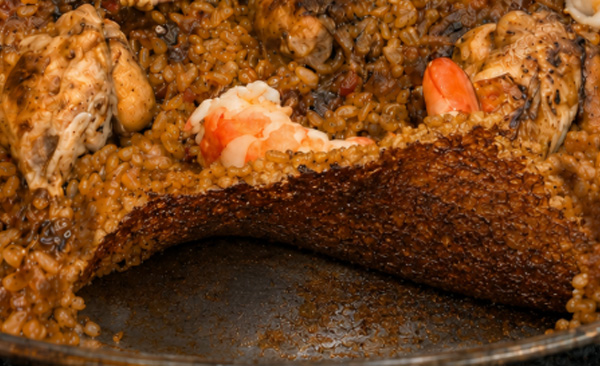
SOCARRAT is the thin, crispy layer of toasted rice that forms at the bottom of the paella pan. Highly prized, it concentrates the flavors and aromas of the broth and the caramelized ingredients
To achieve this, cook it for about 1 to 1½ minutes over very high heat at the very end of the cooking process. It’s vital to keep smelling the rice constantly. It should smell toasty but never burnt. If it starts to smell burnt, turn off the heat immediately and remove the paella pan. There should also still be some water left in the pan (you should hear the sizzling sound of the bubbles).
Cover the paella with aluminium foil (if it’s cooked to perfection), with a damp or clean tea towel (if you think it’s a bit dry), or leave it uncovered if you think there’s too much stock
In Spain, paella is sometimes eaten with a splash of lemon juice. That’s why we cut the lemons into wedges and serve them alongside each serving of paella. This way, each diner can decide for themselves whether to add lemon and how much to use. It’s a personal choice.
We also usually serve it with some good bread
We hope you enjoy this delicious paella recipe that we serve at Granada Cooking Experience. We are proud to be able to offer you something that holds a special place in our culinary history, a dish we eat every week and which brings us so many unforgettable moments.